Jonathon Schlefer points out at the HBR that the
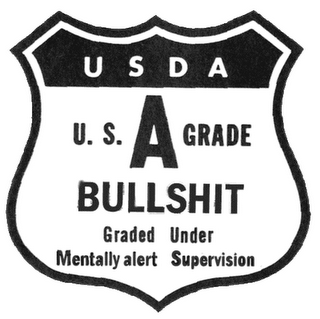
Invisible Hand of the market is, well, Grade A Bullshit.
One of the best-kept secrets in economics is that there is no case for the invisible hand. After more than a century trying to prove the opposite, economic theorists investigating the matter finally concluded in the 1970s that there is no reason to believe markets are led, as if by an invisible hand, to an optimal equilibrium — or any equilibrium at all. But the message never got through to their supposedly practical colleagues who so eagerly push advice about almost anything. Most never even heard what the theorists said, or else resolutely ignored it.
An engineering analogy may help. The invisible hand sees market economies as passenger planes, which, for all the miseries of air travel, are aerodynamically stable. Buffeted by turbulence, they just settle back into a slightly different flight path. General-equilibrium theory, as it developed in the 1960s and 1970s, suggests that economies are more like fighter jets. Buffeted by a gust, they wouldn't just settle into a slightly different path but would spin out of control and break asunder if "fly-by-wire" computer guidance systems did not continually redirect them to avert disaster.
Economists might call the fighter-jet analogy polemic, but no knowledgeable theorist would say that the so-called "general equilibrium" model is stable. The very word "equilibrium" is deeply misleading in this context because it describes a situation that is not an equilibrium, either in plain English or in engineering. Economic equilibrium — a stable state toward which an economy would move — reveals a hope on the part of economists, not a mechanism captured in an accepted model. Speaking of "equilibrium" allowed economists to fool themselves, and others.
There is more,
go read it...


Comments