'Social' and 'Social-based Distributed Computing'
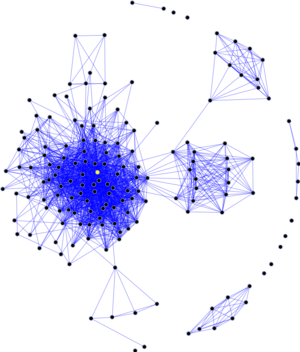
Sounds really nifty in theory - but it does get back to the point that The Social Graph is Neither Social Nor A Graph...imagine a distributed computing system where multiple users pool their machines' resources and you can send tasks to other connected "nodes" when you need more power. It sounds useful in theory, but there's also the security risk of whether or not you trust the node you're sending and receiving data from.Researchers at the University of Minnesota are (...building...) a distributed computing network based on a social graph of users you already trust. The researchers envision a situation in which you can assign tasks to different nodes based on social acquaintance — if you're willing to share your innermost thoughts, photos, and videos on a social network, why not share your computing power as well?Through testing a number of different distributed computing scenarios, the researchers found that social graphs have "strong trust characteristics as evidenced by face-to-face interaction"...
The semantic definitions suck (what is a 'friend'?), there is no negativity ('enemy' anyone?), relationships are more complicated than this, and are far more time-dependent.Ergo, the fact that I'm friended with someone on FB does not necessarily imply that I trust them more than a random stranger. In fact, I may actually trust them less! (Do I trust an incurable gossip with my private e-mails?).
Which, I guess, is a long-winded way of getting to the point, which is that relationships are much more complex than the (currently simple) 'social graphs' that we have in place. The question is whether we are willing to add the extra levels of information necessary to strengthen these graphs (and whether that is even possible...)


Comments